Ely, Minnesota · A growing museum

Water carries memory.

The Minnesota Canoe Museum preserves and shares the art, culture, and history of canoeing and canoe country—one boat, route, builder, and story at a time.

Our work

A museum for the living canoe country.

Canoes have carried people, trade, food, family knowledge, labor, friendship, and the imagination of Minnesota. The museum is building a public home for those stories—beginning in Ely and extending across lakes, rivers, portages, workshops, and generations.

We are in a new phase: gathering the collection, strengthening partnerships, and making a durable digital record while the physical museum takes shape.

Collection framework

What we are preserving

Watercraft

Birchbark, wood-and-canvas, cedar-strip, aluminum, fiberglass, and composite canoes—each with its own material intelligence and use.

Makers & Outfitters

Builders, repairers, guides, outfitters, camps, and the work that made travel through lake country possible.

Routes & Memories

Maps, photographs, field notes, oral histories, portages, and the changing relationship between people and water.

Historic photograph of an Ojibwe birchbark canoe, circa 1910.
Ojibwe birchbark canoe, c. 1910. Unknown photographer; Minnesota Historical Center. Public Domain Mark via Wikimedia Commons.

A long story

More than one canoe history.

  1. Anishinaabe knowledgeBirchbark canoes and the water routes of the north belong to living Ojibwe communities and traditions. The museum’s work begins with respect, accurate names, and real relationships.
  2. Fur trade & portagesGrand Portage and the border lakes formed one of the great waterborne corridors of the continent.
  3. Builders & recreationIn the nineteenth and twentieth centuries, canoe building, camping, scouting, and outfitting formed new canoe cultures across Minnesota.
  4. Canoe country todayBoundary waters remain a place of joy, livelihood, refuge, stewardship, and debate.

Image shelf

Pictures that open the story.

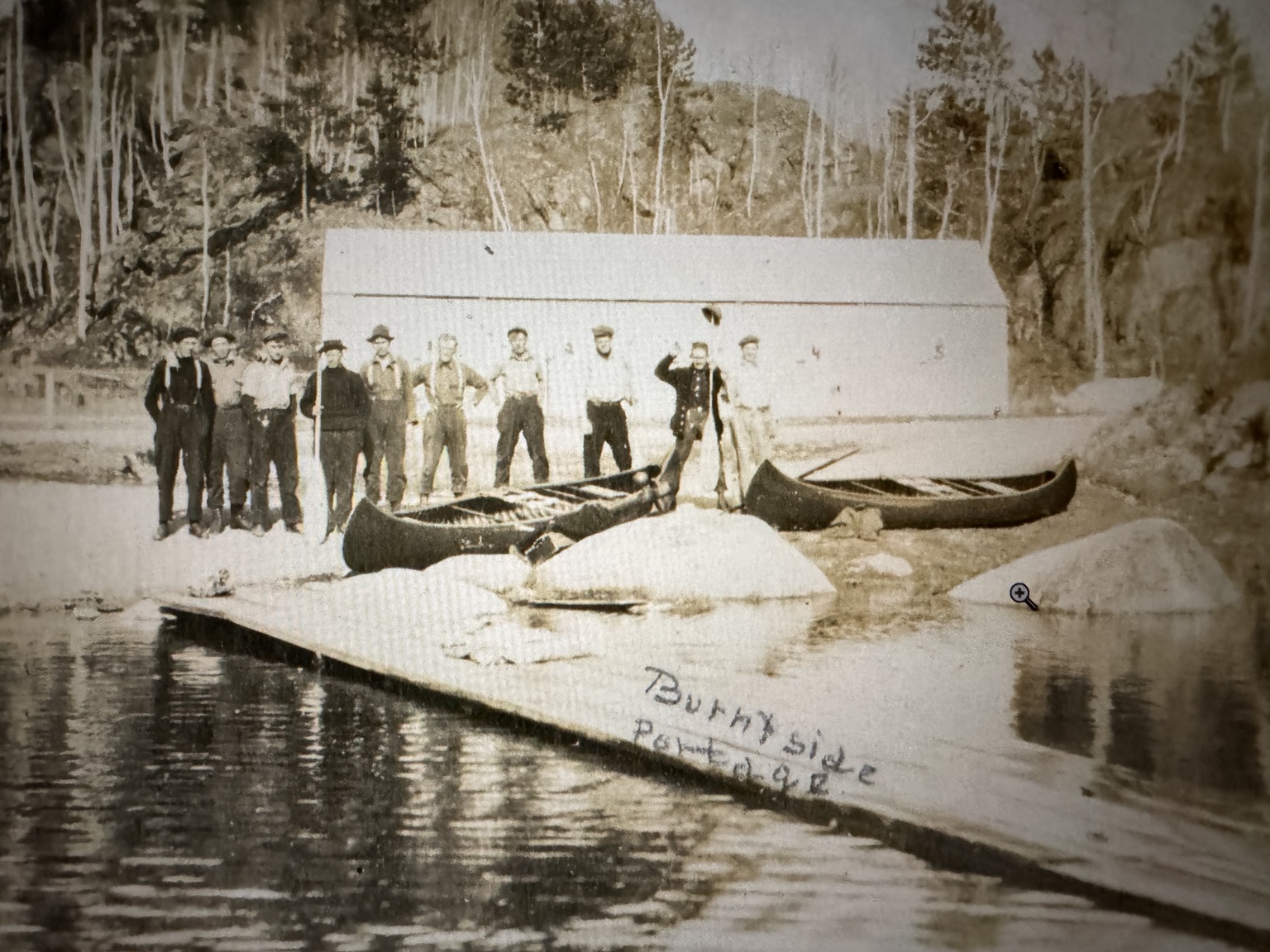
Historic group at a lakeshore landing beside two canoes. Andrew Hanson is among the people pictured; a handwritten Burntside caption appears on the print.
Burntside landing, date unknown. Andrew Hanson is pictured. Private collection. The handwritten caption reads “Burntside”; the museum is seeking identification of the remaining people, canoes, building, and date.
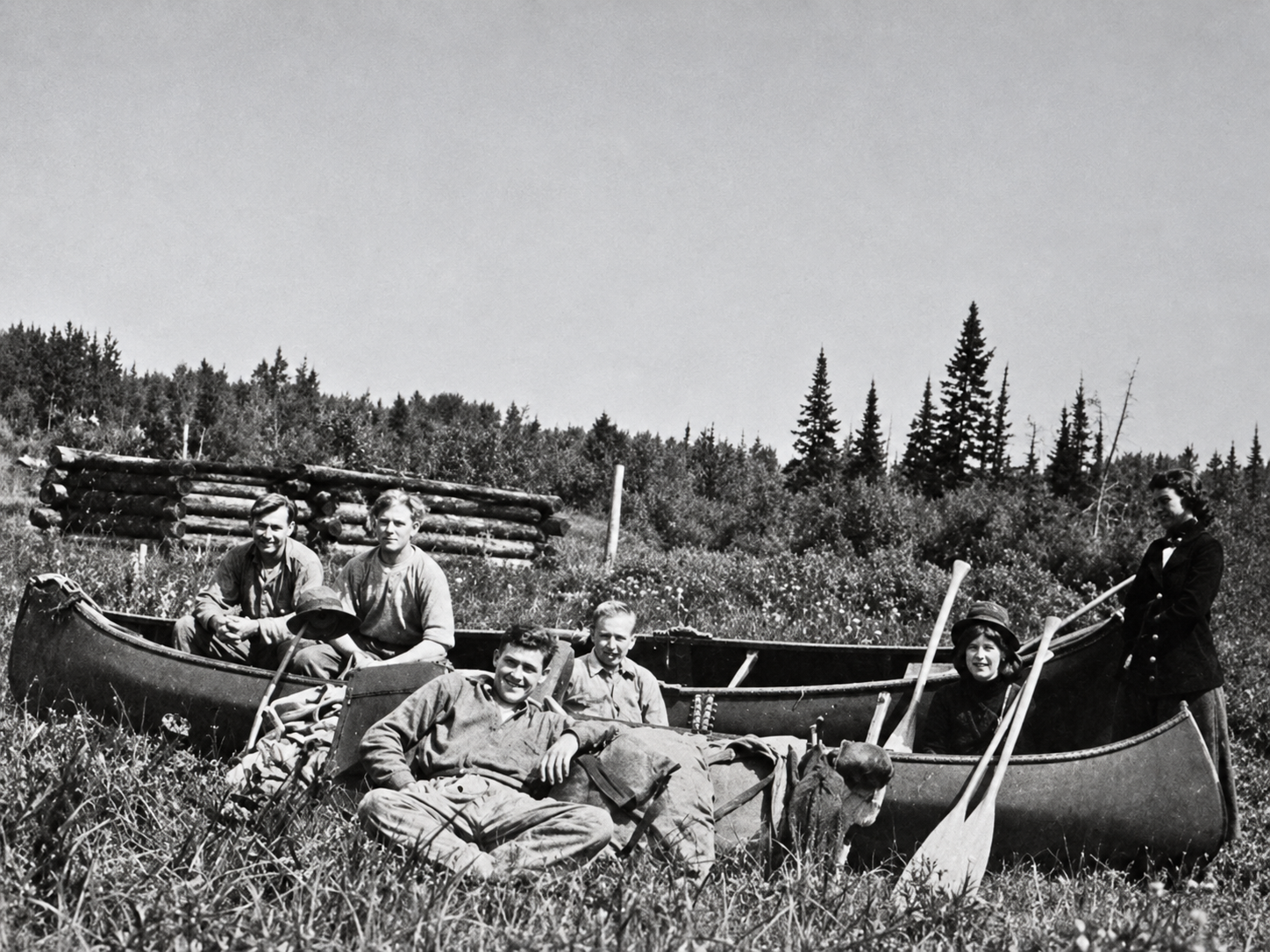
Family group with three canoes and a dog beside a log camp, circa 1930s to 1940s.
Family canoe photograph, c. 1930–1940s. Private collection.
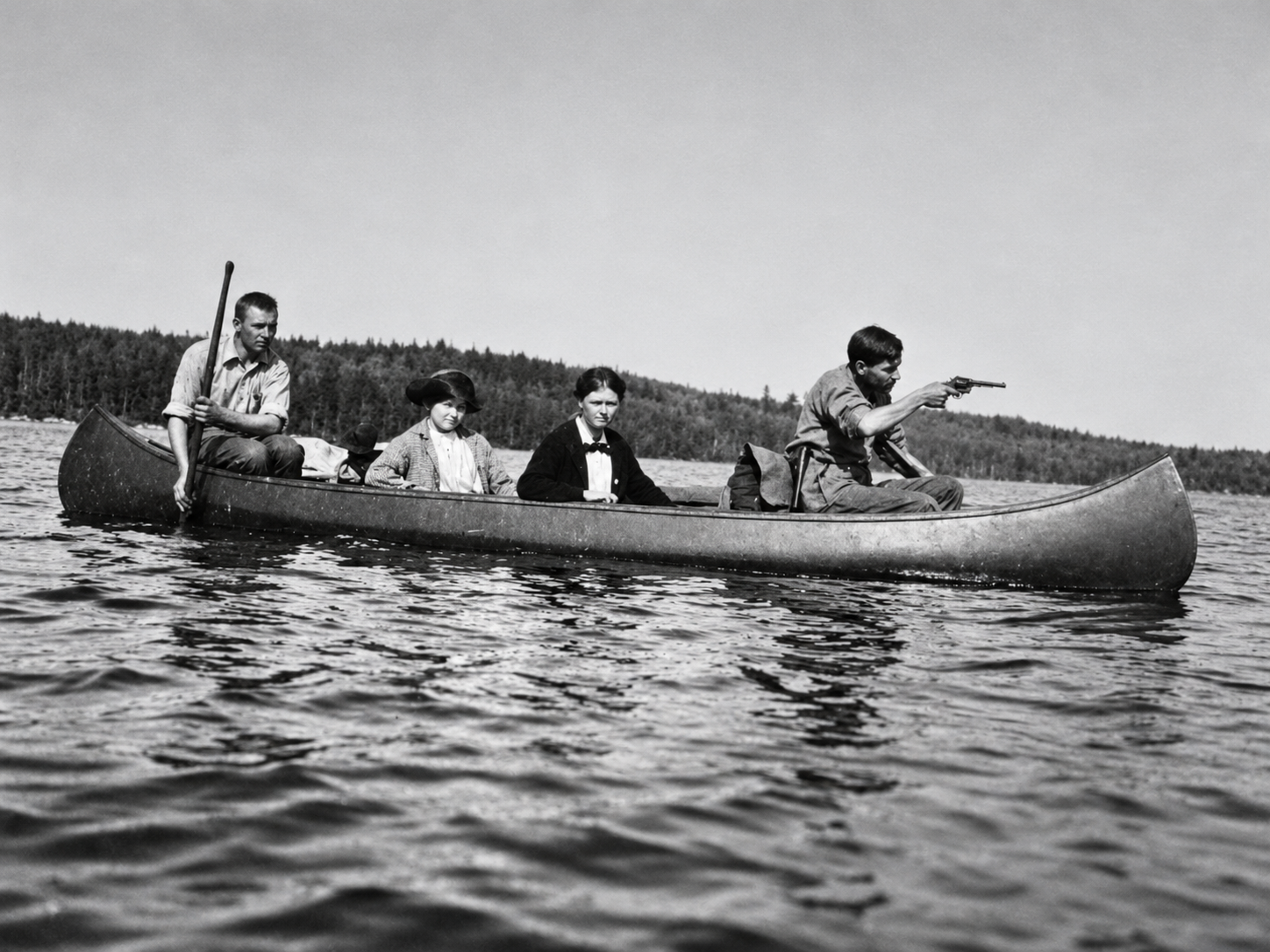
Four family members traveling by canoe on a lake, circa 1930s to 1940s.
Family canoe photograph, c. 1930–1940s. Private collection.
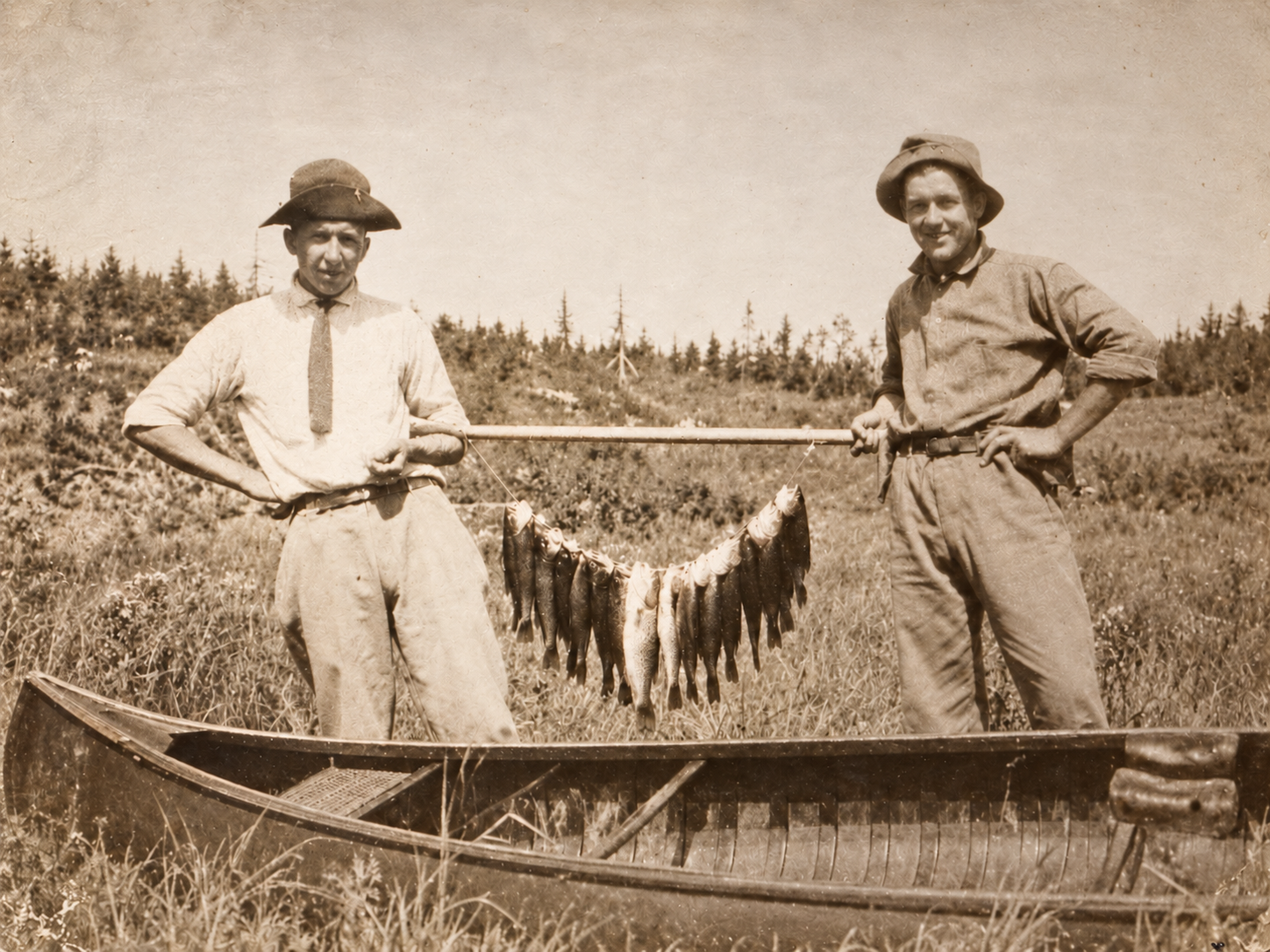
Two men pose beside a canoe with a string of fish during a family canoe-and-fishing outing.
Family canoe-and-fishing outing, date unknown. Private collection.
People carrying a canoe and duffel on a portage from Flour Lake to Hungry Jack Lake in July 1940.
Portage from Flour Lake to Hungry Jack Lake, July 1940. U.S. Forest Service, National Archives; public domain.
A canoe party at the dock at Flour Lake Campground in Superior National Forest.
Canoe party at the dock, Flour Lake Campground. U.S. Forest Service, National Archives; public domain.

Open research shelf

Begin exploring.

These public resources help establish a shared historical record. Each linked item has a documented public-domain or U.S. federal-government rights basis; individual captions should always preserve source and credit.

Help build it

The museum is growing.

Have a canoe, story, photograph, map, builder record, or connection that belongs in this history? We would like to hear from you.

paddle@mncanoemuseum.info
Minnesota Canoe Museum
PO Box 22 · Ely, MN 55731

A 501(c)(3) nonprofit founded in 2008.